
Queenstown to Mount Cook Road Trip: 2 Scenic Routes You Can’t Miss (2026)
Planning a Queenstown to Mount Cook road trip and not sure which route to take or where to stop? This guide will help you figure it out.
There are two main ways to drive between Queenstown and Aoraki/Mt Cook, weaving through the Southern Alps – one through Cromwell and the other via Wanaka and the Crown Range. Both have their highlights, but if I had to pick, the Wanaka route is my favourite for the views and variety. The two options join at Lindis Pass, so you could even do one each way.
I’ve driven different parts of this route several times, and this post outlines the best places to stop along both routes, plus the shared second half. If you’re building a South Island itinerary and want to make this drive more than just a way to get from A to B, you’re in the right place.
Want more Queenstown content? My Queenstown Travel Hub includes things to do, places to stay, and more.


| Route | Distance | Drive time (no stops) | Road conditions | Scenic highlights |
|---|---|---|---|---|
| Via Cromwell & Lindis Pass (SH8) | ~265 km | ~3 hr 30 min | Easier drive overall. Lindis Pass can have snow or ice in winter; usually less steep than Crown Range. |
|
| Via Wanaka & Crown Range (SH6/8) | ~275 km | ~3 hr 45 min | Steeper, winding Crown Range section (highest main road in NZ). Snow or ice possible in winter; chains may be required. |
|
Times are estimates in normal conditions. In winter, check NZTA for road status and chain requirements, and allow extra time for daylight.

🗺️ From road trips to city breaks, I’ve written lots about NZ — you can browse it all here.
Queenstown to Mount Cook Routes
Queenstown
Queenstown is such a significant destination in New Zealand that it deserves multiple posts all to itself.
So, in that spirit, I’ve already got detailed posts on things to do in Queenstown, places to stay, the best day trips from Queenstown, and a comparison of Queenstown and Auckland.
It’s a location I highly recommend for the huge range of activities and stunning scenery, and should be on every visitor’s New Zealand itinerary.
Route 1: via Wanaka
This route is the more scenic of the two but will take longer and is more susceptible to adverse weather conditions. Generally speaking, this is the one to go for unless your circumstances make it problematic.

Lake Hayes
Lake Hayes is the first stop for both routes, located just before the routes split.
In the right conditions, Lake Hayes is a great example of a mirror lake. Thanks to the position of the lake in relation to the mountains, you’ll get very different images depending on where you stand.
A perfect place to enjoy a coffee before you continue on your journey.
The lake’s circuit, a popular walking and cycling track, is a great option if you have more than one day to do this journey with time to spare for hiking along the way.
Lake Hayes is also a haven for bird enthusiasts, home to a variety of bird species along its shores.

Arrowtown
Arrowtown is one of my favorite stops on the drive – an old gold-mining town with charming streets, historic buildings, and autumn colors that are unreal if you’re visiting in April or May.
Pro tip: Try to arrive early. On my first attempt during a recent trip, I had to give up entirely – there was zero parking available, even though the main car parks are surprisingly big for such a small town. I went back the next day much earlier and it made all the difference.
Make sure you stop by the historic Arrowtown Chinese Settlement to discover the experiences and living conditions of Chinese immigrants hoping to make their fortune in the gold rush.
If you’ve got the time, I really recommend popping into the Lakes District Museum. From the outside it looks tiny, but inside it’s way bigger and more immersive than you’d expect – lots of interesting context about the area and Arrowtown’s gold rush past.

Crown Range Road
This is the kind of road I love – winding back and forth with a decent incline to get the best scenic views. This road is also the main reason why this route may not be suitable in Winter.
It’s fantastic to drive in good weather, but personally, I’d never attempt it if the road is slippery or icy.
Take a quick pause at the Arrow Junction Lookout Point for views back over the farms and mountains.
🎥 Here’s a 12-minute highlight reel I filmed of the Crown Range Road — the scenic mountain pass between Queenstown and Wanaka.
Crown Range Road Scenic Lookout
Further up the road you’ll reach the Crown Range Road Scenic Lookout. The views are amazing, but what you’ll see will be very much weather-dependent.
You might get clear views over the mountains. You might even find that there are clouds in the valley below you, with mountain summits visible in breaks between clouds.
This lookout has much more space for parking compared to Arrow Junction Lookout so you can easily spend a few minutes enjoying the views.

Crown Range Summit
A short distance up the road you’ll find the Crown Range Road Summit. Another great place to pause for those mountain views.
Athe the summit of the Crown Range Road you’ll be at the top of the highest sealed road in New Zealand – an altitude of 3500ft.
If you are trying to be efficient in your driving then you may not want to stop at both the scenic lookout and the summit, but it’s useful to know that there are two similarly sized stops so that if one is full you still have a backup option.

Cardrona
Cardrona is best known for its historic pub—and for good reason. The Cardrona Hotel, dating back to the 1860s, is one of the oldest in New Zealand and easily one of the most photographed. It’s worth a quick stop even if you’re not staying overnight.
Inside, it’s simple and cozy. I’ve had lunch here a few times and the beer garden out back is especially nice on a sunny day, with mountain views and plenty of space to stretch your legs.
If you’re doing this drive in winter and into snow sports, Cardrona Alpine Resort is just up the road. It’s a popular ski field with runs for all levels, but it does get busy on weekends and holidays—something to factor in if you’re passing through during the season.
Wanaka
Wanaka sits on the edge of Lake Wanaka and is one of the most popular towns in the South Island. It’s a good place to stretch your legs or even break up the journey with an overnight stay – I’ve stayed here myself and it’s a relaxed contrast to Queenstown.
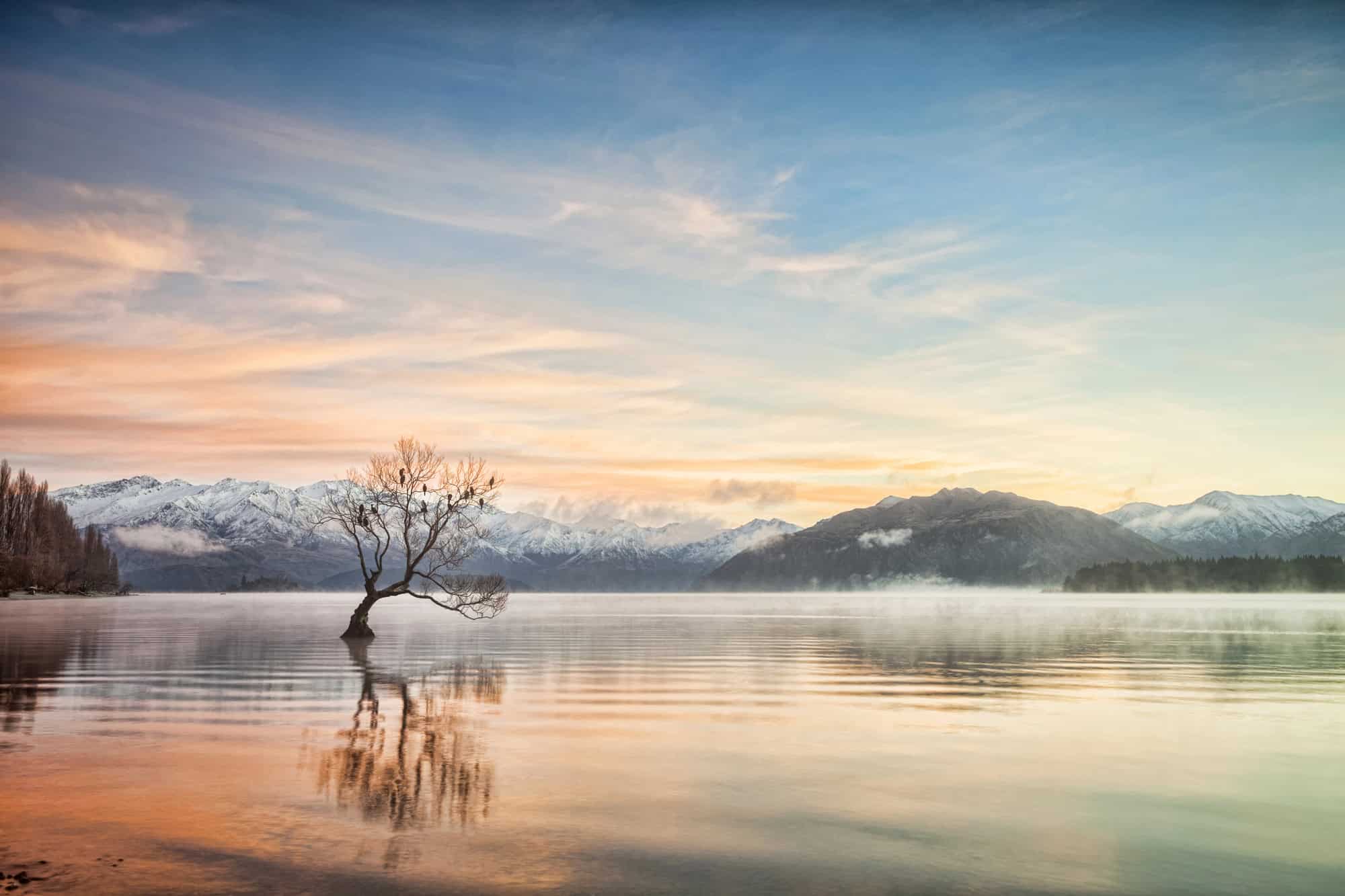
If you’re just passing through, the lakefront walk is easy and scenic. You’ll find ‘that Wanaka tree’ – a lone willow growing out of the lake – a short walk from the town centre. It’s probably the most photographed tree in the country.
Just a heads up: the water level in the lake varies quite a lot, and on dry days, the tree’s roots might be completely exposed. If you’re hoping for that postcard shot, timing matters.
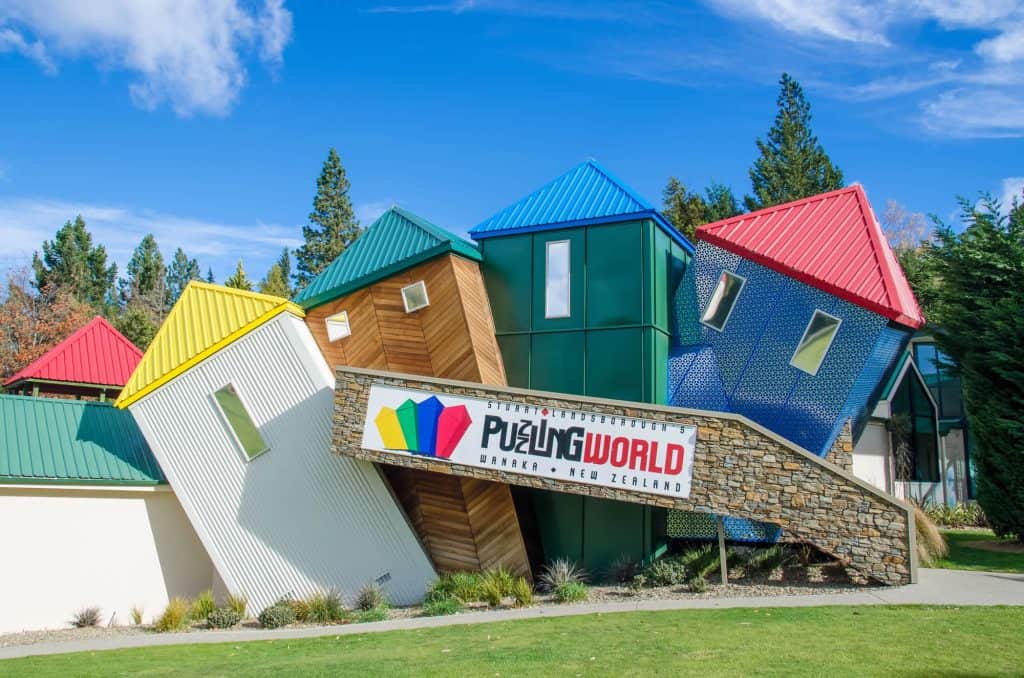
Wanaka is also great for families. I spent a hot afternoon at Puzzling World and made the mistake of leaving my water bottle in the car – the maze is much harder than it looks, and it took a lot longer to get out than expected. Still, it was a lot of fun and a nice break from the drive.
If you’re visiting in spring or summer, the Wanaka Lavender Farm is just a short drive out of town. It’s a relaxed place to wander for half an hour, with fields of lavender (in season), a shop selling local products, and a few lavender-coloured sculptures, like an oversized door, that make for fun photo stops.
It’s a bit touristy but still a nice break from the main town, especially if you’re travelling with kids.
There are plenty of restaurants, walks, and activities like jetboating and skydiving, and Wanaka is also one of the entry points into Mount Aspiring National Park. If you’re planning to hike the Routeburn Track, there’s a good chance you’ll pass through here.
If you’re torn between staying in Queenstown or Wanaka, I’ve written a full comparison post, but I’ll say now – Queenstown usually wins for me, even though Wanaka has plenty going for it too. I also have a full guide to the best things to do in Wanaka if you are staying there for a couple of days.
From here, the road continues towards Lindis Pass, where it merges with the alternative route below.

Lindis Pass
After Wanaka, the road continues over Lindis Pass, where the Wanaka and Cromwell routes merge. This stretch of State Highway 8 connects Otago and Canterbury and is known for its wide, open scenery.
The landscape changes a lot depending on the season. In summer, it’s mostly dry grassland. In winter, snow is common and the road can be icy, especially in the morning, so take extra care if you’re driving in colder months.
There’s a small lookout point near the summit where I stopped briefly on my last trip. It’s a great spot to stretch your legs and take in the view, but the parking area isn’t large so it’s worth being quick if others are waiting.
From here, the route continues on to Omarama and Lake Pukaki before reaching Mount Cook.
Omarama Hot Tubs
The Omarama Hot Tubs are a popular tourist attraction located in the small township of Omarama.
This facility offers private hot tub experiences, where visitors can soak in fresh mountain water that is sourced directly from the surrounding alpine environment.
Each hot tub is situated in an individual enclosure, providing privacy and a direct view of the stunning natural scenery. The water in the tubs is not treated with chemicals, maintaining its natural purity.
Visitors have the option to control the temperature of the water to their preference, ensuring a comfortable and personalised experience. Apart from the hot tub experience, you can also add on a sauna session.
Before visiting, I recommend making a booking through their official website, as the facility operates on a reservation-only basis to maintain the quality of service.

Omarama Clay Cliffs
The Clay Cliffs of Omarama are a jagged, otherworldly set of rock formations just outside the town. Formed from gravel and silt left behind by glaciers, they’ve been shaped by wind and water into steep pinnacles and deep ravines.
To get there, you’ll take a short detour off the main highway along a gravel road that’s quite uneven in places. I’d recommend driving slowly and carefully. Not all rental companies allow you to drive on unsealed roads, so it’s worth checking the fine print. I used Ezi Car Rentals, which was flexible about this kind of access.
There’s a small parking area near the base of the cliffs. From there, it’s a short but uneven walk into the formations. The area isn’t mobility friendly, and you’ll need a reasonable level of fitness to explore properly – there are steep sections and loose ground in places, so take care.
Entry is $5 per car (cash only). There are no toilets or facilities at the site, and I’ll be honest – after visiting, my car was so dusty I had to get it cleaned.
If you’re into geology or dramatic landscapes, it’s a fascinating stop. If not, you might want to skip it and continue towards Lake Pukaki.

High Country Salmon
Just before you reach Twizel (coming from Omarama), High Country Salmon is a fun and easy stop right off the highway. It’s a working salmon farm with a café, viewing platforms, and even the option to feed the fish.
I stopped here and had a salmon bagel, but there’s a huge variety of salmon dishes — from sashimi and platters to pies and hot meals. If you’re into fishing, you can also try catching your own salmon in the pond, which makes it a fun option for families or anyone looking for something different.
Even if you’re not staying long, it’s a good stop to stretch your legs and try something a little weird!
Twizel
Twizel is the largest town in the Mackenzie District and a useful stop on the way to Mount Cook. It was originally built in the 1960s to house workers on the Upper Waitaki Power Scheme, and later became a service town for local farms and tourism.
I stopped here briefly on my last trip — there isn’t a huge amount to do, but it’s a good place to grab lunch and refuel, especially since it’s the last major petrol station before Mount Cook. There are also a few cafés, restaurants, and a supermarket if you need to stock up on supplies.
Twizel has more accommodation options than Mount Cook Village, often at lower prices, so it’s a practical overnight base if you’re not staying in the national park itself.
The town sits near Lake Ruataniwha, which offers rowing, sailing, and fishing, and it’s part of the International Dark Sky Reserve, making it a good location for stargazing. Twizel also connects to the Alps 2 Ocean Cycle Trail, which runs from Aoraki/Mount Cook to the Pacific Ocean.
Just outside of town, you’ll also find New Zealand Alpine Lavender — one of the largest lavender farms in the Southern Hemisphere. They sell everything from soaps to chocolates, but it’s not open all year, so check their website before visiting.

Lake Pukaki
Lake Pukaki is one of the real highlights on the Queenstown to Mount Cook drive. The lake is a very distinctive turquoise blue.
If you see photos of the lake you might think that people have gone a bit too far with their edits, but it really is a very bright blue. The colour comes from finely ground rock particles, known as glacial flour, suspended in the water.
The first time I saw it, years ago, I wasn’t expecting how vivid the colour would be. I actually turned the car around to go back to the viewpoint, and it was just as impressive when I returned on my most recent visit.
The road from Pukaki to Mount Cook runs right along the lake’s edge. It’s incredibly scenic, but also worth driving with care. On my last trip, I had a close call with a tourist who was driving on the wrong side of the road — they didn’t seem to realise until I used my horn.
The road is straight enough to see ahead, but it’s a reminder to stay alert, especially near popular photo spots.
At the southern end of the lake you’ll find a visitors centre with parking, toilets and information. One of the standout features of the lake is its unobstructed views of Aoraki Mount Cook, New Zealand’s highest peak.
Mount Cook Road Lookouts
There are several stopping points for photos along Mount Cook Road, so give yourself enough time to enjoy the views, especially on clear days.
If you pass by a scenic viewpoint that is full, it won’t be long before you come across another. There are plenty of places to pause and take photos of New Zealand’s tallest mountain – Aoraki Mount Cook.
Route 2: via Cromwell
Lake Hayes
Just as in Route 1, before the road splits take a quick pause at Lake Hayes, or even take a longer walk around the lake for those classic mountain views.

Kawarau Gorge
If you’re heading out of Queenstown via Cromwell, you’ll pass through Kawarau Gorge – a narrow, winding stretch of road carved between steep cliffs.
One of the most popular stops here is the Kawarau Bridge Bungy, where you can watch people leap off the bridge above the river. I haven’t worked up the courage to try it myself (yet), but the site is worth a quick break. There’s free parking, a café, and a viewing platform, so I grabbed an iced latte and watched a few brave jumpers do their thing.
Even if bungy isn’t your thing, it’s a scenic and easy stop that adds a bit of adrenaline (from a safe distance) to the route.

Gibbston Valley
Just after the Kawarau Bridge, you’ll enter Gibbston Valley, one of Central Otago’s most famous wine regions. This stretch is lined with vineyards and cellar doors, with Gibbston Valley Winery being the best known. They offer tastings, a restaurant, and even a luxury lodge if you’re planning to stay.
If you’re driving yourself, it’s worth noting that most wineries here lean towards the higher end of the price range, so a tasting is a good way to sample before you buy.
That said, almost every Queenstown wine tour includes Gibbston Valley, so if you’re planning to join one later (like those I’ve listed in this post on Queenstown’s best tours), it might make more sense to skip it now and let someone else do the driving. You can also read more about the different New Zealand wine regions in this guide, including how Gibbston compares to others.
Other nearby wineries to consider:
- Peregrine Wines – known for its striking architecture
- Mt Rosa Wines – often more relaxed, and sometimes has food trucks
If you do want to stop for a tasting, it’s a good idea to book ahead, especially in peak season.

Roaring Meg
The Roaring Meg Lookout gives some great views of the Kawarau River, which at this point on the river has some faster-flowing water.
The power of the rapids made this an ideal spot for a hydroelectric power plant, and there are a few signs around to give you some history about this part of the region.
It’s not somewhere you are likely to spend a long time at, but as you will be driving directly past the lookout it’s a good place to stop for some photos, especially when under the right conditions the water is a very bright blue.

Cromwell
Cromwell is known for its stone fruit production – something the town celebrates proudly with a giant fruit sculpture on the roadside. It’s also home to a well-preserved historic precinct, where you can explore buildings from the gold rush era along the edge of Lake Dunstan.
The town sits at the junction of the Clutha and Kawarau rivers, making it a hub for water-based activities, and it’s often used as a base for those heading to nearby ski fields or conservation areas.
Cromwell is also part of the Central Otago wine region. I stopped at the Wooing Tree Vineyard, where the new cellar door tasting room is now open. They also serve food, and the staff were genuinely friendly.
I picked up a bottle of their Tickled Pink dessert wine to take home to the UK – and that’s saying something, as I’m not usually a fan of sweet wines.
The vineyard itself is set around a tree that’s become something of a local legend – it’s been the site of many proposals, and still stands at the heart of the vineyard rows.

After Cromwell, the road continues through Tarras, a small settlement with a handful of cafés and shops, before joining back up with the Route 1 path at Lindis Pass. From here, the remainder of the journey to Mount Cook follows the same route described earlier.
Mount Cook Village
Mount Cook Village is the main base for exploring Aoraki Mount Cook National Park, home to New Zealand’s highest mountain and some of the most dramatic scenery in the Southern Alps. The village sits at around 760 metres above sea level and is surrounded by dramatic alpine landscapes.
Accommodation ranges from hostels to high-end lodges, but options are limited so it’s worth booking ahead, especially in peak season.
I’ve visited the village in all kinds of conditions; on one trip it was so misty I couldn’t see Mount Cook at all through the fog. The drive in was still beautiful, but it’s a good reminder that alpine weather can be unpredictable. I ended up returning a few days later to do one of the hikes in clearer conditions.

The Hooker Valley Track is the best-known walk in the area. It’s a scenic hike with river crossings and great views (when the weather cooperates). The foggy photo above and the one below were taken 24 hours apart, admittedly one from near the car park and one on the actual track. What a different a day makes!

Check the DOC website for updates before you go, and try to arrive early in the day. The later you arrive, the harder it is to find parking.
You’ll also find the Sir Edmund Hillary Alpine Centre here, which gives a brief look at the region’s history. While I’ve taken a scenic helicopter flight over Mount Cook, it was from the Franz Josef side — not from the village – but tours from this side are popular as well.
When the skies clear, this is one of the most visually stunning areas in the country. But even when it’s cloudy, the journey is still worth it.

Which Route Should You Choose?
Both routes from Queenstown to Mount Cook are stunning, but which one works best depends on your plans:
- Via Wanaka & the Crown Range: More scenic and varied, with highlights like Arrowtown, Wanaka, and the Lavender Farm. Best if you want a slower, more photogenic drive.
- Via Cromwell: Slightly shorter and easier, with fewer steep climbs. A safer choice in winter, especially if you’re not confident driving in snow or ice.
If you have the time, I recommend doing one route on the way there and the other on the way back. That way you don’t miss anything and get the best of both worlds.
For more road trip itineraries around New Zealand, I’ve collected my best New Zealand routes in this Itinerary Hub.
Preparing for the Journey
Before you set off on this road trip, here are a few pointers to ensure you are well-prepared.
Best Time to Visit
New Zealand is a year-round destination, but the experience changes a lot depending on the season.
- Summer (Dec–Feb): Warm weather and generally clearer skies make this the best time for outdoor activities and photography.
- Winter (Jun–Aug): Expect snow in the mountains and icy conditions on the roads. This is also the main ski season.
If you’re driving in mid-winter, be cautious about the Crown Range Road on the Wanaka route. It’s steep, full of switchbacks, and becomes hazardous when icy. I’ve only driven it in summer, and even then I had one day when the clouds dropped low and visibility wasn’t great. The road itself was fine, but it reinforced my decision that I wouldn’t attempt it in winter.
I’m a confident driver, but I don’t have much snow driving experience, so in winter I’d personally stick to the Cromwell route. If you do decide to drive the Crown Range at that time of year, make sure to check road reports in advance and carry snow chains.

Essential Packing Tips
Packing for a New Zealand road trip isn’t complicated, but there are a few things worth keeping in the car for this particular journey:
Snow chains in winter – especially if you plan to drive the Crown Range Road.
Layers of clothing – the weather can swing quickly, especially at Lindis Pass or around Mount Cook.
Sturdy shoes – handy if you want to do any hikes, stretch your legs at Lindis Pass, or explore the Clay Cliffs.
Water and snacks – I learned my lesson the hard way at Puzzling World when I forgot my bottle. There are long stretches without many food stops.
Cash – a few places (like the Clay Cliffs) don’t take cards.
Sun protection – UV levels in New Zealand are strong year-round, so bring sunscreen, sunglasses, and a hat.
Transportation
When it comes to travelling from Queenstown to Mount Cook, you’ve got a few options to consider.
Renting a car or a campervan gives you the freedom to explore at your own pace, stopping at the many scenic spots along the way.
🚗 Ready to Hit the Road?
For this road trip, I personally used Ezi Car Rentals in New Zealand – and they were fantastic. The pickup in Queenstown was smooth, as was the drop off. I paid for full insurance coverage for peace of mind, and the whole thing was very easy.
If you’re planning your own Queenstown to Mount Cook road trip, I recommend booking your car hire early, especially in peak seasons.
It won’t cost you extra, but it helps support the blog so I can keep sharing guides like this – thanks for your support!
👉 Book your rental car via Booking.com here
If you prefer to sit back and enjoy the view, there are also day tours you can take, however, I wouldn’t generally recommend this unless you are unable to rent a car. If renting isn’t an option, then have a look at this tour.
Book your day tour from Queenstown to Mount Cook here.
Accommodation

Queenstown Accommodation
For a full range of accommodation options in Queenstown, have a look at my dedicated post, but you can also see a few suggestions below.
Budget: Absoloot Hostel
Mid Range: Chalet Queenstown
Luxury: QT Queenstown
Wanaka Accommodation
Budget: Altamont Lodge
Mid Range: West Meadows Wanaka
Twizel Accommodation
Budget: Twizel Holiday Park
Mid Range: Sky Suites
Luxury: Matuka Lodge
Mount Cook Accommodation
Mount Cook Village is both small and popular, so options are limited and expensive in the village itself. Haka House is a hostel that would be the best budget option. Hermitage Hotel is the most well known Mount Cook accommodation option, but that does mean it can book up quickly.
Aoraki Court is a good choice but still quite expensive. If you do stay in the village make sure you book well in advance. Otherwise, your best option would be to return to Twizel for the night.
Final Thoughts on the Queenstown to Mount Cook Road Trip
The drive from Queenstown to Mount Cook is one of my favourites in New Zealand. Both routes have plenty to enjoy along the way, from small towns and quirky stops to some of the country’s best scenery.
I’ve done this trip in different seasons and weather – on one visit Mount Cook was completely hidden by cloud, while on another I had perfect views of the mountain reflected in Lake Pukaki. No two trips are the same, and that’s what makes it special.
My best advice is not to treat it as just a transfer between two places. Give yourself time to stop, take photos, and enjoy the journey as much as the destination.
If your road trip continues north, you’ll likely pass through Tekapo. I’ve written a detailed guide to the Christchurch to Lake Tekapo route so you know what to expect.
If you’re planning more of a South Island adventure, you might also like my other road trip guides:
Christchurch to Auckland Drive
Picton to Queenstown Road Trip
Queenstown to Wanaka: Driving Routes, Bus and Shuttle

