
Things to Do in London Alone (From a Local)
Spending time alone in London doesn’t have to mean defaulting to your usual café, endlessly scrolling at home, or wandering around with no real plan.
Maybe your friends have moved away. Maybe everyone’s busy. Maybe you just don’t feel like organising a group chat for the tenth time this month. Or maybe you’re visiting and suddenly realise you’ve got a free afternoon (or evening) to fill on your own.
I’ve lived in London most of my life, and while I travel solo often, I’ve also spent a lot of time properly enjoying my home city on my own (thanks to several friends moving away – so inconsiderate!). Over the years, I’ve figured out which experiences actually work solo – and which ones I save for group outings and birthday plans.
And it’s not only for first-time visitors – if you live here and feel like you’ve “done London” already, there’s still plenty left.
London is one of the easiest big cities to explore alone. It’s busy enough that no one notices you’re solo, varied enough that you’ll never run out of options, and safe enough that heading out on your own doesn’t feel like a big deal.
From peaceful museum afternoons and market wanderings to low-key solo dates and quiet corners perfect for reading, these are the best things to do in London alone, whether you’re after culture, fresh air, or just some uninterrupted time to yourself.

Why London Is So Good for Solo Exploring
London works unusually well if you’re on your own.
First, no one notices. It’s a busy city full of commuters, tourists, students, and people glued to Google Maps. You blend in instantly, whether you’re walking along the river or sitting alone in a café.
Second, many of the best things to do here are naturally solo-friendly activities; museums, galleries, markets, bookshops, long walks through parks. You don’t need a group to enjoy them, and in many cases it’s easier without one.
There’s also the practical side. Public transport is straightforward, most major museums are free, and neighbourhoods are compact enough that you can explore one area at a time without overcomplicating your day. If something doesn’t interest you, you can leave. If something does, you can stay as long as you like.
And because London is so varied, you can shape the day around your mood; high-energy sightseeing, quiet wandering, or something structured like a show or guided tour.
That flexibility is what makes it one of the easiest big cities in the world to explore alone.
If You’re Looking for Things to Do in London Alone, Start Here
If you don’t want to scroll through everything, here’s how I’d choose.
If you’ve already done the obvious landmarks
Try the London Mithraeum, the Museum of London Docklands, the Barbican Conservatory, the Royal Courts of Justice, or Sir John Soane’s Museum. These are the kinds of places you don’t always see on first-time itineraries, but they’re far more interesting than they sound.
If you want something quiet or low-energy
Head to Kew Gardens, Richmond Park, Regent’s Canal, the British Library Treasures Gallery, or the Wallace Collection. These are good for wandering slowly without feeling rushed.
If you want something to do in the evening
Book a West End show, try a comedy night, or apply for tickets to a TV show taping like QI or Taskmaster. You won’t stand out for being alone; everyone’s focused on the stage. Just know that UK comedy can be very sarcastic, and not every show is for everyone.
If you’re brand new to London and just want to get your bearings
Walk the South Bank, visit the British Museum, explore Covent Garden, and book Horizon 22 for skyline views (quieter than Sky Garden, cheaper than The Shard).
The Classic London Sights That Actually Work Solo
Some of London’s biggest landmarks are surprisingly easy to enjoy alone. You can move at your own pace, skip what doesn’t interest you, and linger where it does without feeling rushed.
These are the ones I genuinely return to on my own.

Explore the South Bank: My Go-To Walk for Solo London Days
This is still my default answer when someone asks what to do alone in London.
The stretch between Westminster and Tower Bridge is flat, easy to follow, and packed with things to look at without needing a plan. You pass the London Eye, the Tate Modern, Shakespeare’s Globe, St Paul’s across the river, and The Shard in the distance, but the walk itself is what I enjoy most.
I love doing this solo because there’s no pressure to keep moving. I can stop for a coffee, grab something to eat at Borough Market, pop into an exhibition at Tate Modern, or just wander slowly and watch the boats go past.
I avoid peak summer weekends; it gets crowded and slightly chaotic. Early mornings and weekday afternoons feel much calmer.
If you’re new to London, this walk gives you instant context for the city. If you’ve lived here for years, it still holds up.
→ If you’re new to the city, I’ve got a full post on the South Bank’s best stops.

The Tower of London
This is one of London’s more expensive attractions, and it’s absolutely a tourist hotspot. I don’t go often. But when I do, I’m reminded why it’s still worth it.
I’m a history nerd; Tudor history in particular; so this place has always held a fascination for me. On my last visit I went with a friend who had lived in London for twelve years and had never actually been inside. That’s surprisingly common. A lot of Londoners walk past it, but don’t go in.
If I’d been alone, I would have stayed longer.
The Tower isn’t somewhere you rush. The White Tower dates back to the 11th century, and there are very few cities that can claim they have a building over a thousand years old sitting right in the middle of everything.
It works well solo because you can linger where you want to. I also recommend joining one of the Yeoman Warder tours that are included in the ticket price. They are genuinely entertaining and informative.
If you’re not particularly interested in history, this may not be the best use of your budget. But if you are, it’s one of the places in London that I think is great for both locals and tourists.
→ Into history? I’ve rounded up the best historical attractions in London, and this one tops the list.

Walk Across Tower Bridge
If you’re visiting the Tower of London, cross Tower Bridge afterwards and link it into a South Bank walk. It’s an easy way to turn one activity into an afternoon without needing extra planning.
I wouldn’t necessarily pay for the Tower Bridge Exhibition unless you’re particularly interested in the engineering or Victorian history. The real appeal is the walk itself. You get a great view back towards the Tower, and once you cross, you can head along the river towards Borough Market, Tate Modern, and beyond.
It’s one of those things Londoners often take for granted. We walk past it constantly, but it’s still one of the most recognisable bridges in the world. And it costs nothing to enjoy it.
If you time it right, this is a very easy solo route: Tower of London first, cross the bridge, then follow the river at your own pace.
Just make sure you don’t go to London Bridge instead – that’s a boring one.

Enjoy the Skyline, But Choose Your Viewpoint Carefully
London looks good from above. The question isn’t whether to go up somewhere, it’s where.
If you want the cheapest and least crowded option, choose Horizon 22. It’s free, modern, and usually much quieter than Sky Garden. You don’t get the indoor garden aesthetic, but you do get wide views without feeling rushed.
It’s also taller than Sky Garden, and one window looks down over it, you can just about spot the viewing area below.
Sky Garden is free too, but it’s busier and feels more like an event space. If you go, book ahead and try for an earlier slot. I like it, but I don’t find it especially relaxing when it’s packed.
The Shard is the expensive option. The views are impressive, and on a clear day you can see far beyond London. I wouldn’t say it’s essential unless it’s your first visit or you’re celebrating something. For most people, one of the free options does the job.
If you’re already near the City after the Tower or walking along the river, Horizon 22 is the easiest add-on. Whichever one you pick, I recommend booking in advance. You can get walk-in tickets sometimes, but booking is better.
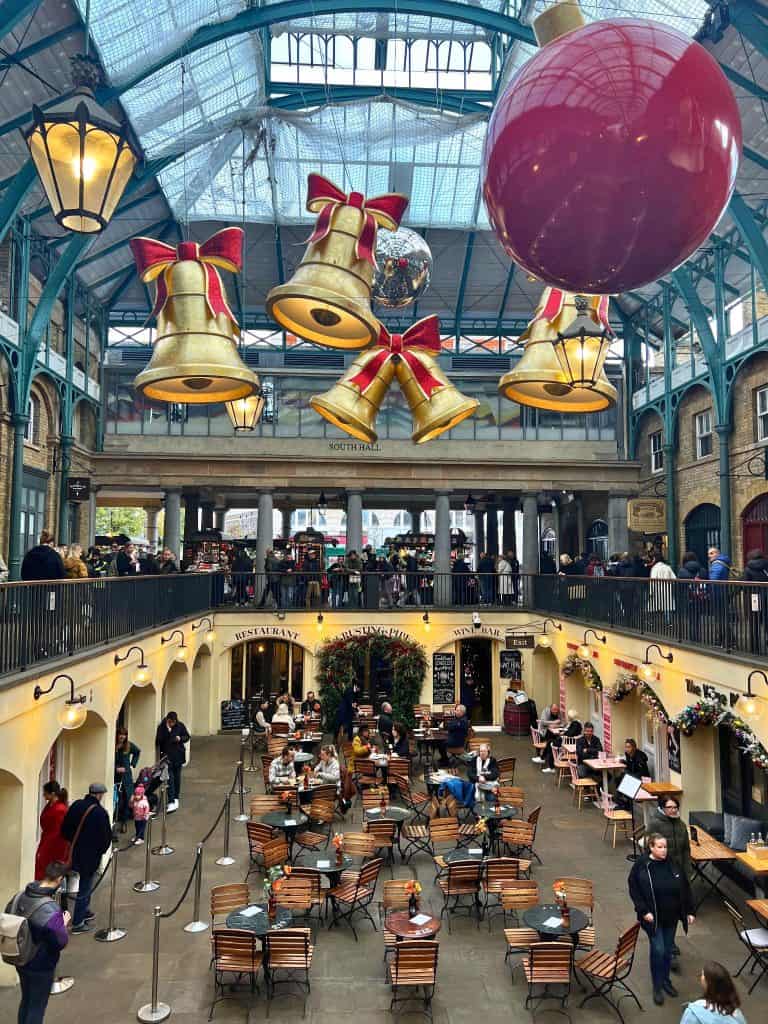
Explore Covent Garden
Covent Garden is busy, polished, and undeniably touristy. I wouldn’t dedicate half a day to it, but I do think it works well as a solo wander.
It’s good for people-watching, popping into a few shops, and seeing what street performers are doing in the piazza. I usually treat it as a short stop rather than a destination; walk through, have a look around the covered market, maybe grab a coffee, then move on.
Because it’s compact, it doesn’t feel awkward to be there alone. You’re never the only solo person, and no one pays attention.
If you want something quieter, head a few streets away into Neal’s Yard or Seven Dials. The atmosphere shifts quickly once you step off the main square.


Thames River Cruise
I wouldn’t call this essential, but it’s an easy solo activity if you want to sit down for a while and still feel like you’re seeing something.
The Thames runs past many of London’s major landmarks, so you get a different perspective on the city without having to navigate crowds. It’s particularly useful if you’re tired but still want to make the most of your day.
I’d treat it as a practical way to move between areas rather than a standalone attraction. For example, you could take the boat from Westminster towards Tower Bridge or Greenwich instead of using the Tube.
If you prefer walking and don’t mind covering ground on foot, you probably don’t need it. But if you like the idea of seeing the skyline from the water, it’s an easy option that doesn’t feel awkward to do alone.
Culture and Museums in London for Solo Travellers
One of London’s biggest strengths is its museums. Many of the major ones are free, which still surprises people from countries where equivalent institutions can cost a lot to enter.
They’re also ideal to do alone. You can move slowly, skip entire wings without guilt, sit down when you need to, and spend twenty minutes reading one plaque if it interests you. I almost always enjoy museums more on my own for exactly that reason.
These are the ones I think work particularly well solo.

Visit the Natural History Museum
Whether you’re into dinosaurs, geology, or just want to be wowed by the architecture, the Natural History Museum is one of the most rewarding places to wander solo. I can spend longer in the galleries I’m interested in and skip other areas.
Personally I love the dinosaur collection and the Treasures of the Earth gallery.
I’ve been more times than I can count, and still find new things to look at each time. It’s especially good if you’re looking for a longer, no-pressure kind of afternoon – just don’t go on a rainy Saturday unless you enjoy school trip flashbacks.
It’s an enormous place so I recommend that you plan in advance what you want to see so you don’t run out of time. Also, make sure you wear comfortable shoes.
→ Planning a museum crawl? I’ve rounded up the best museums in London to help you narrow things down.

The British Museum
Yes, it’s one of the most visited museums in the world – but for good reason. The scale is massive, the collection is extensive, and you can easily spend a few hours just getting lost in it. If you try to see everything, you’ll get tired and slightly overwhelmed.
This is why it works well solo. You can decide in advance to focus on two or three sections and ignore the rest (or spend an entire day there if you want to). I tend to gravitate towards the ancient civilisations galleries and then leave before museum fatigue sets in.
It’s free, central, and easy to dip into even if you only have an hour. I wouldn’t attempt it as a “quick 30-minute stop”, but it’s ideal if you want a structured, low-pressure afternoon.

The Tate Modern
The Tate Modern is in a former power station on the south bank of the River Thames.
As well as modern paintings and sculptures, the museum is also known for the Turbine Hall which provides space for large installations which frequently change. There is always something new to see, so it’s a great choice if you are interested in modern art.
Modern and contemporary art isn’t for everyone, and I wouldn’t pretend it is. Some exhibitions will click, others won’t. I actually prefer going alone because I don’t feel the need to explain what I think about something, or pretend to understand a piece I don’t.

Victoria and Albert Museum
The V&A is one of my favourites for solo visits because it’s less overwhelming than the British Museum but still wide-ranging.
It covers everything from fashion and jewellery to sculpture and decorative arts, so you can follow whatever catches your attention rather than sticking to a strict route. The Sculpture Hall is particularly good if you want somewhere calm to sit for a while.
I usually go solo so I can take my time and drift between galleries based entirely on what catches my eye. One of my favourite things here is the massive Dale Chihuly glass sculpture hanging in the main entrance.
If you like design and textiles rather than ancient artefacts, this often feels more engaging than some of the other headline museums.

Visit the National Gallery (and the National Portrait Gallery)
Located in Trafalgar Square, the National Gallery houses a vast collection of European paintings from the 13th to the 19th centuries.
Masterpieces by artists like Van Gogh, Da Vinci, and Turner are highlights, and the free entry makes it accessible to all. I’m not an art expert, but I still enjoy seeing some of the world’s most famous works of art.
The gallery layout makes it easy to wander without needing a plan, and it rarely feels crowded even when it’s busy. Bonus: their gift shop is excellent if you like postcards or quirky art books.
Right next door, the National Portrait Gallery feels slightly more intimate. If you prefer faces and stories over sweeping landscapes or religious scenes, you may actually enjoy that one more.
Together, they’re one of the easiest cultural stops in central London, especially if you’re already near Trafalgar Square or Covent Garden.

Visit the Imperial War Museum
This one isn’t light, and it’s not for everyone.
The Imperial War Museum focuses on Britain and the Commonwealth in modern conflicts, particularly the First and Second World Wars. The Holocaust exhibition is especially powerful and not something I’d rush through.
If you’re interested in military history, or in understanding how global conflicts shaped modern Britain, it’s an important place to visit. If you’re looking for something cheerful or casual, this probably isn’t it.
I actually think this works better solo. You can move at your own pace, stop when something hits you, and leave when you’ve had enough.
Visit the British Library Treasures Gallery
The main library is for research purposes and you have to join as a member to go into it, but there is a section open to the public – the Treasures Gallery.
This gallery includes originals of documents such as the Magna Carta and Domesday Book.
A copy of Shakespeare’s First Folio, letters from Jane Austen and an original manuscript of Alice’s Adventures in Wonderland are also on display. If you are a bibliophile, then I highly recommend a visit to see these treasures.
Smaller, Less Obvious Museums (If You’ve “Done London” Before)
Museum of London Docklands

If you enjoy museums but want to avoid the crowds at the British Museum and Natural History Museum, this is a great one. I enjoyed it much more than I expected on my first visit, with its recreated Victorian alley, detailed models and interesting displays.
It is slightly more complicated to get to than the central museums, but when I combine it with a wander around the Docklands area I’m happy to make the effort.
London Mithraeum
If you’ve already ticked off the British Museum and the big headline institutions, this is an interesting change of pace.
The London Mithraeum sits underneath Bloomberg’s modern office building in the City. It’s the remains of a Roman temple to the god Mithras, discovered during post-war construction and later reconstructed below ground level.
It’s free to visit, takes about an hour in total, and runs on timed entry slots. The experience is slightly different from a typical museum. You move through a small exhibition space first, then descend into the reconstructed temple where there’s a short pre-recorded presentation with sound and lighting effects.
I found it more interesting than I expected, though it’s not something I’d prioritise over the major museums if you’re short on time.
If you enjoy Roman history or like uncovering older layers of London beneath the modern skyline, it’s worth an hour. If not, you won’t feel like you’ve missed something essential.
Sir John Soane’s Museum
Sir John Soane’s Museum is one of the easiest places in London to visit alone because it’s small, free, and doesn’t take long to walk through.
The rooms are filled with architectural models, paintings, and curiosities collected by Sir John Soane, and the layout makes it feel more like exploring someone’s home than a traditional museum.
It’s a good option if you’re in Holborn and want something interesting that doesn’t require a full afternoon.

Wallace Collection
The Wallace Collection is a free art museum in a historic townhouse just behind Oxford Street. The galleries cover everything from paintings to decorative arts, and the setting makes it calmer than some of the bigger museums.
You can wander at your own pace, stop for a coffee in the courtyard café, and then carry on exploring Marylebone afterwards.
Tour the Royal Courts of Justice
One of the more unusual tours you can do in London is a visit to the Royal Courts of Justice – one of the most senior courts in the British justice system. This Victorian Gothic building, opened in 1882, is a masterpiece of architecture and home to the High Court and Court of Appeal of England and Wales.
Guided tours are available, allowing visitors to explore courtrooms and learn about legal history and proceedings. Depending on the day and what is in session you can even head to the public viewing gallery of a real courtroom to observe proceedings of a live trial after your tour.
This is an experience that must be booked in advance, and the courtroom session is not guaranteed as there may not be any trials in session when you visit.

Parks, Views and Outdoor Walks
London has a lot of green space. You don’t have to leave the city to get quiet paths, big skies, or somewhere to think.
These are the outdoor spots I’d actually choose when I want space.

Hyde Park
Hyde Park is huge, central, and easy. If you’re staying near Paddington, Knightsbridge, or South Kensington, it’s the simplest option.
You can walk around the Serpentine, sit by the water, or just cut through it between attractions. I wouldn’t cross the city specifically for Hyde Park; it’s more of a convenient breathing space than a destination.
I also love the rose garden in Regent’s Park as an alternative choice!

Walk Along Regent’s Canal
The River Thames is the most famous of London’s waterways, but it isn’t the only one. There are several canals around the city, and Regent’s Canal is one of the prettier ones.
I’ve done sections of the Regent’s Canal walk, especially around Camden, and it’s one of the easiest solo routes in London. You can start in Little Venice and head towards Camden, or just dip into it for a shorter stretch.
Eventually, you’ll hit Camden Locks and can venture into the markets to grab some souvenirs and food. It’s a path that a lot of people walk on their own so you won’t feel out of place.
This works particularly well if you want movement without crowds, you’re linking it with Camden Market, or you just want something low-effort but scenic. I avoid it late at night; during the day it’s completely fine.

Visit Greenwich
Greenwich is known for its maritime history, royal heritage, and green spaces. Key attractions include the Royal Observatory, where you can stand on the Prime Meridian Line, dividing the eastern and western hemispheres.
The National Maritime Museum delves into Britain’s seafaring past, while the Cutty Sark, a restored 19th-century tea clipper, stands as a testament to the age of sail.
Greenwich Park, one of London’s eight Royal Parks, offers sweeping views of the city.
It’s far enough from central London that it feels like you’ve “gone somewhere”, but it’s still easy to reach by train or boat.

Barbican Conservatory
If you want something a bit different in central London, the Barbican Conservatory is an easy solo stop.
It’s a surprisingly lush indoor garden hidden inside the Barbican Centre, with tropical plants, palms, and little corners that feel a world away from the concrete outside.
This is best as a low-effort add-on rather than a main destination. It’s perfect if you’re already nearby, or you want a quieter break between museums and walking around.
It’s free to visit, but opening hours can be limited and it isn’t always open every day, so it’s worth checking before you go. If you time it right, it’s one of the easiest ways to get a little peaceful green space without committing to a full park walk.
If you like places that feel slightly hidden, this is one of the best ones in London.

Explore Hampstead (and Hampstead Heath)
If I want London to feel less like London, I head to Hampstead.
It still has that village feel, especially around the high street, and then you’ve got Hampstead Heath for proper open space. Parliament Hill gives you one of the best skyline views in the city.
This is a good choice if you’re tired of Zone 1, you want independent cafés instead of chains, or you prefer wandering to structured sightseeing.

Visit Kew Gardens
Kew Gardens is a UNESCO World Heritage site that spans over 300 acres, showcasing an impressive array of plants and flowers from around the world. Kew is paid entry, so it’s not a casual drop-in like Hyde Park, but that also means it’s usually calmer. It’s ideal if you want a slow, intentional few hours somewhere green.
I’ve visited during special exhibitions, including the Chihuly glass installations, and that was one of my favourite London days.
It’s further out, so I wouldn’t squeeze it into a short trip. But if you’ve already seen the main sights and want space, it’s worth the journey.
Richmond Park deer walk
Richmond Park feels like you’ve left London entirely.
The deer are the obvious draw, but what I actually like is the space. The paths are wide, the views are open, and you’re not constantly navigating around crowds.
It’s best if you want proper countryside energy, you don’t mind travelling further, and you’re happy with a longer walk.
If you’re only in London for a couple of days, I’d prioritise central areas first. But if you live here or have extra time, it’s a good reset.
Primrose Hill viewpoint
Primrose Hill is quick and easy.
You walk up, get one of the clearest skyline views in London, sit for a bit, and head back down. It pairs well with Regent’s Park or Camden.
I wouldn’t go massively out of my way for it, but if you’re nearby, it’s one of the simplest solo stops in the city.
Markets & Nearby Wanders
If you prefer browsing to structured sightseeing, London’s markets are an easy solo option. You can dip in and out, stop when something catches your eye, and leave when you’ve had enough.
I tend to pair markets with a nearby neighbourhood wander, rather than treating them as standalone destinations. That way it feels less like ticking something off and more like exploring.

Camden Market (instead of Borough Market)
Camden Market has been part of my life since I was a teenager. It used to be one of my default Saturday wander spots, and it’s still somewhere I’ll happily go alone.
If you’re choosing between Camden and Borough, I personally prefer Camden. Both have great food options, but Borough can be absolutely rammed, especially on weekends. Camden feels more spread out; you’ve got different sections, canalside paths, small shops, and space to move rather than one tight cluster of stalls.
It’s good for shopping if you like browsing rather than going with specific things in mind. Vintage clothing, quirky gifts, independent traders, and a huge range of food options mean you can drift around without a plan.
I also have a soft spot for the hot chocolate at Chin Chin, especially in winter.
And if you’re looking for the colourful umbrella-covered walkway in the photo above, head towards The Stables Market near the Wizard Store; it’s tucked inside that section rather than being a standalone street.
This works well solo because everyone is doing their own thing anyway. You won’t feel out of place.

Spitalfields Market and a Shoreditch wander
Spitalfields and Shoreditch work well together because you can treat it as one long, low-pressure wander rather than two separate “things” you have to plan.
Spitalfields Market is the easy starting point. It’s a covered market a short walk from Liverpool Street, with a mix of stalls (vintage, jewellery, crafts) and plenty of food options. I like it as a solo stop because you can browse slowly, stop when you feel like it, and leave whenever you’ve had enough.
Once you’ve had a look around, you can walk straight into Shoreditch. This is where London feels less polished and more creative, with street art everywhere and lots of independent shops and cafés. Even if you don’t buy anything, it’s a good area to wander with no agenda because there’s always something to look at.
If you want a simple plan: start at Spitalfields, take your time in the market, then walk towards Shoreditch High Street and let yourself meander. It’s one of those areas where being alone feels completely normal.
Small warning: both can get busy on weekends, but they still feel less intense than Borough Market because the area is spread out, so you’re not stuck in one tight crowd the whole time.

Notting Hill and Portobello Market
Notting Hill is one of the prettiest parts of London, but I wouldn’t go just for the pastel houses.
If you’re visiting on the right day, Portobello Road Market is the real draw. It’s particularly good if you like antiques, vintage clothing, and browsing without a strict plan. You can wander slowly, dip into side streets, and stop for coffee when you’ve had enough.
It works well solo because it’s essentially a long, linear wander. You don’t need to commit to anything; just walk until you’re done.
That said, Saturdays can be very busy. If you don’t enjoy crowds, go earlier in the day or visit midweek when the market is smaller but calmer. Check the website for the opening hours as they vary seasonally.
The “Notting Hill” film references are there if you want them, but I’d treat that as a bonus rather than the main reason to go. The annual Carnival in late August is a completely different experience; loud, crowded, and energetic. Incredible if that’s what you’re looking for, but not a quiet solo stroll.
Shows, Music and Cultural Evenings
Watch a West End Show
The West End is one of the easiest evening activities to do alone.
There are always multiple shows running at the same time, from long-standing big name musicals to shorter plays and limited runs.
Going solo actually makes it easier. You’ve got a better chance of grabbing a single last-minute ticket, especially if you’re flexible about where you sit. If I’m booking on the day, I’ll usually check what’s available rather than fixating on one specific show.
I’ve found that smaller productions can be just as enjoyable as the headline names.
If there’s something specific you really want to see, book directly with the theatre. If you’re happy to be spontaneous, last-minute deals can work well.
And once the lights go down, it truly doesn’t matter whether you came alone or not — everyone’s focused on the stage.

See a Comedy Show
Comedy is one of the easiest solo evening plans in London.
You’re sitting in a dark room facing a stage; no one cares who you arrived with. It’s also usually affordable compared with theatre tickets, especially if you go to smaller venues.
Angel Comedy at The Bill Murray in Islington and Top Secret Comedy Club near Covent Garden both run regular shows, often with short sets from multiple comedians. Soho Theatre is another good option if you prefer something more structured or a single headline act.
One thing to know: UK comedy can be very dry and very sarcastic. It’s often self-deprecating and occasionally blunt. If you’re not used to that style, it can feel different from American stand-up in particular.
I’d treat it as a low-pressure evening option rather than a must-do. If you’re in the mood for something lively and don’t want to wander around after dark, it works well.
And like theatre, it’s easier to grab a single ticket at short notice.
Apply for Tickets to a TV Show Taping
This is one of the more underrated solo activities in London.
Shows like QI and Taskmaster are filmed in front of live audiences, and you can apply for free tickets. I went to see QI being recorded and genuinely loved it. You’re there for a few hours, but you’re completely absorbed in what’s happening on stage.
It works well solo because you can’t chat during filming anyway. Once it starts, everyone is focused on the show.
A friend of mine managed to get tickets to a Taskmaster recording and was sworn to secrecy about the upcoming lineup. That’s part of the fun; you often don’t know exactly what you’ll see until you’re there.
The main thing to know is that tickets are usually allocated via waitlists rather than specific dates. You apply, confirm availability, and often find out fairly last minute whether you’ve got in. That makes it especially good for locals.
Talks at the Royal Institution
If you want an evening that isn’t theatre or comedy, the Royal Institution is a good alternative. They run talks on science, technology, and big ideas, and it’s an easy solo format: you turn up, sit down, and listen.
The topics vary a lot, so I’d only go when the subject genuinely interests you. Pick well and it feels like a proper night out; pick badly and it can feel like school.
Structured Without Needing Company
Not everything on this list is strictly “alone”. Some options technically involve other people — but you don’t have to organise anyone, make conversation, or perform socially.
These work well if you want structure without the effort of planning.

Join a Walking Tour
Yes, this involves a group. But it’s very different from travelling with a group.
You turn up, listen, learn something specific, and leave. There’s no obligation to socialise beyond a polite hello. Most people are focused on the guide, not each other.
If I want context on a particular area rather than just wandering aimlessly, a walking tour is an easy way to give the afternoon shape. You remove navigation decisions, you learn something useful, and you don’t have to coordinate plans with friends.
It’s especially helpful if:
You don’t want to think too hard about logistics
You’re new to London and feeling slightly overwhelmed
You want depth on one topic instead of surface-level sightseeing
You’ll find a large selection of walking tours here on Viator!

Visit London’s Best Bookshops
Independent bookshops are an easy option when you want something relaxed that doesn’t take much planning. Hatchards in Piccadilly is Britain’s oldest bookshop and has enough space to wander without feeling crowded.
Daunt Books in Marylebone is known for its travel section and works well if you want somewhere quiet to spend a bit of time on your own. Cecil Court is another good choice, with a row of independent bookshops specialising in rare and second-hand titles.
All three are central, simple to reach, and make a good break between other activities.
If you are a book lover visiting London, I have a guide to the best London bookish activities for you.

FAQs About Solo Travel in London
Is London safe for solo travellers?
Yes, London is generally very safe for solo travellers. As with any major city, it’s smart to stay aware of your surroundings — especially at night — but you won’t stand out for being alone. Stick to well-lit areas, keep your belongings secure, and trust your instincts.
→ Is London Safe – A Tourist Guide breaks it all down in more detail.
What’s the best way to get around London alone?
The Tube is quick and covers almost everywhere. Buses are a good slower-paced option if you want to see the city from above ground. Walking is totally doable (especially in central areas), and ride-hailing apps like Uber and Bolt are widely available.
→ You’ll find all the practical info in my Getting Around London guide.
Are there any activities that are awkward to do alone in London?
Not really. London’s big enough that no one pays attention. If you’re not comfortable eating in a busy restaurant alone, opt for cafés or food markets. Walking tours and museums are super solo-friendly. And for evenings? Try a theatre show or an independent cinema — you’ll blend right in.
How long should I spend in London if I’m visiting solo?
That depends on your pace, but I’d say 3–5 days is a great starting point. Enough time to hit a few big sights, take a day trip, and explore some neighbourhoods without rushing.
What are the best things to do in London alone?
London is ideal for solo exploring because you can build a day around museums, parks, markets, or a show without needing a plan. If you want an easy first day, start with the South Bank walk, add a museum, then finish with a West End show or comedy night.
Practical Tips for Exploring London Alone
London is easy to do solo, but there are a few practical things that make it even smoother.

Eating Alone in London
This is the one people worry about most.
In reality, London is one of the easiest cities in the world to eat alone. Cafés are full of people working on laptops. Pubs regularly have solo customers reading the paper. Markets are built for grazing rather than formal dining.
If you feel awkward in busy restaurants, choose:
- Food markets like Camden
- Cafés with window seating
- Pubs with tables rather than formal dining rooms
- Weekday lunches instead of Friday night dinner rush
I almost always bring something to read if I’m sitting down somewhere properly. It gives you something to focus on and makes the whole thing feel intentional rather than exposed.
And honestly? No one is paying attention.
Getting Around at Night
London doesn’t shut down early, especially in central areas, but the atmosphere does shift.
If I’m out in the evening alone, I:
- Stick to well-lit main streets
- Avoid quieter canal paths late at night
- Sometimes choose the bus over the Tube because it feels less enclosed and easier to orient yourself
Zone 1 and busy neighbourhoods tend to feel active later into the evening. Outer residential areas quiet down faster.
It’s the same common sense you’d use anywhere, but London isn’t inherently intimidating to navigate solo.

Plan by Area, Not by List
London is overwhelming if you try to “see everything.”
When I explore alone, I plan by neighbourhood rather than by attraction. South Bank one day. Kensington another. Camden and Regent’s Canal together.
It reduces travel time, reduces decision fatigue, and makes the day feel more relaxed.
You don’t need to tick off 12 landmarks to have a good solo day. Sometimes one museum, a long walk, and a coffee stop is more than enough.
Where You Stay Matters More Than You Think
If you’re visiting alone, location matters more than aesthetic.
I’d prioritise:
- Zones 1–2
- Close to a Tube station
- Somewhere you feel comfortable walking back to in the evening
Saving £20–£30 per night isn’t worth staying somewhere that adds 40 minutes to every journey. London is big, and travel time adds up quickly.
This is one of those practical planning decisions that makes your whole trip feel calmer.
Feeling Weird About Being Alone? Here’s the Truth
London is busy. People are commuting, sightseeing, meeting friends, staring at Google Maps. No one is auditing who you arrived with.
If you’re not used to doing things alone, it can feel uncomfortable at first. That’s normal. It gets easier quickly.
I’ve eaten in restaurants alone, gone to the cinema alone, and road-tripped across 48 US states alone. The only people who judge solo travellers are people who are too uncomfortable to do it themselves.
And in a city like London, you blend in instantly.
If anything, going solo gives you more freedom. You don’t have to compromise on museums, theatre choices, or how long you spend in a bookshop.
That’s not something to apologise for.
London is great to explore solo — and in my guide to the pros and cons of living in London, I talk about how the city feels day to day for those of us who live here.

Final Thoughts From a London Local
Some of my favourite London days have been solo ones: a museum, a long walk, a coffee somewhere quiet, then home when I’ve had enough.
If you’re visiting, use this list to pick a few solid options and group them by area so you’re not zig-zagging across the city. If you live here, treat it like a reminder that London still has corners you probably haven’t bothered with yet.
So if you’re planning a trip, bookmark this list — and check out these guides to help shape your itinerary:
→ 5 Days In London Itinerary
→ 24 Hours In London
→ Things To Do In London When It Rains
→ Things To Do In London For Book Lovers
→ Solo Female Travel in London
→ Where To Stay In London
→ Worst Time To Visit London (yes, it’s a real thing)
→ Day Trips From London By Train
🗺️ London is just the beginning — check out the rest of my UK travel guides for more inspiration.

