
5 Days in Queenstown: The Ultimate Itinerary for Adventure and Scenery
Queenstown is one of those places that genuinely lives up to the hype. I’ve been several times — in different seasons — and every visit confirms that it’s a destination worth returning to. It’s a tourist hotspot for good reason, packing an impressive variety of activities into a surprisingly compact town.
On my most recent trip in 2025, I spent a week there during summer, mixing lakeside walks, wine tasting, and a skydive — Queenstown is the only place where I’d even consider jumping out of a plane. I always plan my own trips and book activities directly, so everything in this itinerary is based on real, first-hand experience.
This 5-day Queenstown itinerary is designed to balance iconic adventure with space to enjoy its scenery, food and day trips at a realistic pace. While I’ve visited Milford Sound on a separate trip via Te Anau, I’ve included options for day tours from Queenstown, since many travellers base themselves here.
You’ll also find tips on booking activities (especially important in summer, when things book up quickly), scenic drives, where to eat, and how to make the most of your time — whether you’re a first-time visitor or coming back for more.
Think jet boats, hot pools, vineyard lunches and stunning lake views, all paced to help you actually enjoy the experience.
This post is part of my Queenstown Travel Guide, with all my best local tips in one place.

Table of Contents

At a Glance: 5 Days in Queenstown
Here’s how to plan 5 days in Queenstown, with the main highlights, travel times and approximate costs to help shape your itinerary. If you don’t have 5 days, I have alternative Queenstown itineraries for 2 and 7 days to give you some options.
Prices are indicative in NZD and can vary with season and activity choice, for example a scenic flight to Milford Sound or a skydive will significantly increase your budget over a coach tour or jet boat ride.
Day 1 – Arrival & Lakefront Highlights
- Walk along Lake Wakatipu and the Queenstown Gardens
- Take the Skyline Gondola & Luge for views over the town
- Dinner by the lake or aboard the TSS Earnslaw dinner cruise
- Approx. cost: $50–$200

Day 2 – Adrenaline & Adventure
- Choose one or two adventure experiences: skydive, jet boat, bungy jump or paraglide
- Option for a guided hike or bike tour if you prefer something steadier
- Unwind at Onsen Hot Pools or a lakeside bar in the evening
- Approx. cost: $150–$400
Day 3 – Milford Sound or Doubtful Sound Day Trip
- Full-day coach, self-drive or scenic-flight + cruise option
- Pack layers, snacks and a rain jacket
- Approx. cost: $200–$600

Day 4 – Arrowtown & Gibbston Valley Wine
- Morning in Arrowtown for heritage streets, cafés and the Lakes District Museum
- Afternoon wine tasting or lunch in Gibbston Valley
- Optional stop at Lake Hayes for photos
- Approx. cost: $60–$150

Day 5 – Scenic Escape to Glenorchy or Wanaka
- Option 1: Drive to Glenorchy & Paradise for short walks and LOTR scenery
- Option 2: Take the Crown Range Road to Wanaka for lakefront strolls and wineries
- Final dinner with lake views back in Queenstown
- Approx. cost: $50–$120
Tip: Weather can affect adventure activities and flights, so book them early in your trip to allow flexibility if they need to be rescheduled.
Want help turning your Queenstown research into a clearer plan?
My Queenstown Trip Planner is there to help you organise the practical side of the trip, including where to stay, what to prioritise, what to book, and how to make your days fit together more smoothly. It includes a 36-page guide, printable checklist, editable planner, and custom GPT bonus.
View the Queenstown Trip Planner
Day 1 – Queenstown Arrival & Lakefront Highlights

Morning: Arrival & First Impressions
Flying into Queenstown is almost an experience in itself — the approach between mountain ranges can be a little bumpy, but the views are incredible. The airport’s close to town, so transfers are simple. I usually book a SuperShuttle, which drops you directly at your accommodation without the cost of a private taxi.
Once you’ve checked in, take a walk along Lake Wakatipu and through the Queenstown Gardens. It’s an easy loop with beautiful views across to the Remarkables — ideal for stretching your legs after the flight. I like to do it in the morning with a takeaway coffee from Vudu Café before the lakefront gets busy.

Afternoon: Skyline Gondola & Luge
Next, head up to Bob’s Peak on the Skyline Gondola. The ride itself gives you great views, and the top lookout is one of the best in Queenstown.
If you’re trying the luge, know that your first ride has to be on the beginner track. It’s a good way to get used to the controls, and once you’re comfortable, you can move on to the steeper and faster runs.
I like that you control your own speed — you can take it easy if you’re nervous, and the tracks are wide enough that faster riders can go around you if you keep to the side.
It’s worth buying at least three luge rides as a combo when you buy your gondola ticket — adding extra rides at the top is much more expensive.
If you’d rather skip the luge, there’s also a short forest trail from the top that’s quieter and great for photos.

Evening: Lakefront Dining or Dinner Cruise
For your first evening, you’ve got a choice between a relaxed dinner in town or something more memorable out on the lake.
If you prefer to stay local, Smiths Craft Beer House is my pick for a casual first night. It’s friendly and unfussy, with solid pub food and good burgers — a much better option than joining the long queue at Fergburger, which I personally think is a bit overrated.
Finz Seafood & Grill, on the other hand, is a more upmarket choice if you want a proper sit-down meal with lake views.
For something special, consider booking the TSS Earnslaw dinner cruise. This historic steamship has been running for over a century and takes you across Lake Wakatipu to Walter Peak High Country Farm for a buffet dinner.
When I went, the food was excellent — plenty of seafood, salads and hot dishes, plus a carvery where you can choose your own cuts of meat (the roast pork was my highlight). Drinks are extra, but there’s a good selection on board.
After dinner, there’s a short farm show with sheep-shearing and working dogs, which is much better than it sounds. If you’re visiting in winter, swap to the lunch cruise instead so you can still enjoy the scenery in daylight.
👉 Reserve your spot on the TSS Earnslaw Dinner Cruise here.
Tip: Depending on the time of year, there may be a second boat going to Walter Peak, so make sure you book the TSS Earnslaw option for the full experience.

Day 2 – Adrenaline & Adventure
Morning: Skydiving or Alternative Adventure
If you’re planning to skydive, schedule it early in your Queenstown itinerary. Weather can change quickly, and booking for your second day gives you time to reschedule if it’s cancelled.
I’ve jumped with NZONE Skydive twice, both times from 15,000 ft — and it was just as nerve-wracking the second time. Signing the waiver and watching the plane doors open definitely isn’t calming, but the views make it unforgettable.
You see Lake Wakatipu spread out below you, the Remarkables in the distance, and it’s hard to imagine a more dramatic backdrop.
I did get some ear pain on my second jump, so if you’re prone to that, consider the 12,000-ft option. Once the adrenaline wears off, I’ve always felt more tired than expected — it’s probably not the night to book your fanciest dinner.
If you’d like the feeling without the full leap, iFLY Queenstown near the Skyline Gondola offers indoor skydiving. It’s a fun alternative for windy days or anyone who wants a taste of free-fall without jumping out of a plane. I haven’t done iFLY myself, but I might consider it next time I’m in Queenstown.
Afternoon: Jet Boating, Bungy or Paragliding
Queenstown’s jet boats are the classic adrenaline fix. Lots of laughs, without the scary aspect of the more extreme activities in Queenstown. I’ve tried three — Shotover Jet, KJet, and Skippers Canyon Jet — and Shotover is still my favourite. It’s short, fast and scenic, racing through a narrow canyon just outside town.
👉 Book your Shotover Jet ride here.
KJet departs from the lakefront, so it’s convenient if you’re short on time, while Skippers Canyon Jet is the most remote, reached via a guided drive along a private mountain road. It does go along some high, narrow roads, so don’t pick Skippers Canyon if you are nervous of heights.
If you’d rather stay above water, paragliding is another great option. There’s one that goes from the Skyline Gondola, and you would need to buy a separate ticket for the gondola, or another that goes from Coronet Peak with a shuttle from Queenstown.
It’s more serene than skydiving but still gives you that thrill as you glide over the lake. I used paragliding as a stepping stone to skydiving – after loving the paraglide I did a skydive on my next visit.
👉 See Coronet Peak paragliding availability here.

For something truly iconic, Kawarau Bridge Bungy is where commercial bungy jumping began. It’s a good choice if you want to watch first and decide later — the viewing area is ideal for building courage. If you’ve already ticked that off, the Nevis Bungy or Canyon Swing turn things up a notch.
These are all run by A J Hackett, so check out their website to see the options.
Alternative Options:
If none of these appeal, consider swapping in a slower-paced experience like a wine tour in Gibbston Valley or a Lord of the Rings filming locations tour. They’re still distinctly Queenstown but offer a calmer kind of adventure.
Evening: Recover & Relax
After a day of high energy, give yourself a quiet evening. The Onsen Hot Pools are perfect for that — private cedar tubs overlooking the Shotover River, best timed around sunset. Book well in advance if you’re visiting in summer.
When I skydived, I didn’t have much appetite afterwards, so I picked up something light to eat in my room instead of heading back out. If you’re feeling the same, grab a takeaway from Fergbaker or one of the smaller cafés along the waterfront.
A glass of local Central Otago wine and a quiet view of the lake make the ideal end to your adrenaline day.

Day 3 – Milford Sound or Doubtful Sound Day Trip From Queenstown
Morning: Early Start for the Fiordlands
Day three is the big one — your chance to see New Zealand’s famous fiords. You can visit either Milford Sound or Doubtful Sound, both reachable as long day trips from Queenstown, though they each have a very different feel.
If you’re visiting for the first time, Milford Sound is the classic choice. It’s the one you’ll see in photos and travel brochures, and the scenery still lives up to the hype. Several companies run full-day coach tours from Queenstown that include a cruise on the fiord, and for most people, this is the easiest and safest option.
The road from Queenstown is long, narrow and winding, and although I’ve driven it myself, I only recommend doing that from Te Anau, not all the way from Queenstown. It’s a tiring day behind the wheel, and tour drivers know the road far better.
For seasonal information, take a look at my guide to the best time to visit Milford Sound.
👉 Book your Milford Sound cruise and coach tour here.

Doubtful Sound, by contrast, is much quieter and feels wilder. It’s only accessible on a guided tour — you travel by coach to Manapouri, take a ferry across Lake Manapouri, then a second coach over the Wilmot Pass before reaching the cruise terminal. I’ve done this trip once and would happily do it again before Milford.
The scenery feels untouched and the atmosphere is calm and peaceful, without the steady flow of boats you get in Milford. However I have been to Milford several times, and Doubtful only once.
👉 See Doubtful Sound tour prices and availability here.

If you’re not sure which to choose, think about what matters most to you. Milford Sound is iconic and convenient, while Doubtful Sound is remote and serene. For first-time visitors, Milford is usually the one to tick off. For anyone who prefers a quieter experience, Doubtful is hard to beat.
I also have a Milford Sound vs Doubtful Sound comparison guide if you want more help choosing.

Afternoon: Cruising the Fiords
Whichever you choose, pack a few essentials — layers for changeable weather, a waterproof jacket, water and snacks. I’ve bought sandwiches on board the Milford cruise and at the small café near the ferry in Doubtful Sound, but options are limited once you’re on the road.
Don’t be put off by rain. I’ve visited Milford Sound on bright days and in heavy rain, and honestly, the rainy days are often better. The waterfalls surge, mist rolls across the cliffs, and the whole place feels dramatic and atmospheric. Clear days are beautiful, but they can lack the misty atmosphere that makes the fiords so memorable.
If you’re travelling in winter, be aware that the Milford Road can close unexpectedly due to snow or rockfall risk. Tour companies will either refund or reschedule if that happens.
Evening: Return to Queenstown
Both day trips are long — expect around 12 to 13 hours in total — so keep your evening simple. I usually pick up something easy to eat back in town and spend the rest of the night relaxing.
If you’ve done Doubtful Sound, keep an eye out for something of local legend: there are long-standing rumours that moose were once released into that area and still survive deep in the forest. I’ve never seen one myself, but it’s a story locals love to tell — one of those details that makes the region even more intriguing.
Check out my guide to dangerous animals in New Zealand for the moose tale and more animals to be aware of.

Day 4 – Arrowtown & Gibbston Valley Wine
Option A: Arrowtown Morning & Lunch in the Gibbston Valley
Day four is a slower-paced day, perfect for exploring the region’s history and scenery at a relaxed pace. Start in Arrowtown, about 25 minutes from Queenstown. The main street is lined with restored gold-rush buildings, cafés and galleries, and it’s easy to spend a couple of hours wandering.
I’ve visited several times, but it wasn’t until my third trip that I finally went into the Lakes District Museum. From the outside it looks small, but there’s a lower level that goes into surprising depth about the lives of miners during the 19th-century gold rush.
I didn’t know much about that part of New Zealand’s history before, and it completely changed how I saw the town.

Before leaving, stop by the Chinese Settlement at the edge of town. It’s a cluster of restored huts where Chinese miners once lived, with displays about the challenges and discrimination they faced during the gold-rush era.
If you’re visiting independently, allow at least two hours to explore both the museum and settlement properly – most tours only allow time for a quick look.
Parking in the centre fills quickly in summer, so it’s worth arriving around 9 am. After exploring, drive into the Gibbston Valley for lunch. Many wineries have restaurants where you can enjoy a meal with vineyard views – you don’t need to do a full tasting if you’re driving, but you should book a table if you want lunch.
If you still have energy later in the day, stop at Lake Hayes for a short walk or quick photo stop. On calm days the reflections are beautiful, and it’s only a few minutes off the main road.

Back in Queenstown, finish the afternoon with a visit to The Winery in town. They have around 80 wines available through self-serve dispensers – you load a card, pour tasting-sized glasses and pay at the end. It’s a fun way to sample a few local wines safely once you’re done driving for the day.

Option B: Guided Wine Tour Including Arrowtown
If you’d rather make wine tasting the focus of your day, book a guided wine tour from Queenstown. Most include pick-up and drop-off, a short stop in Arrowtown, and two or three vineyard tastings in the Gibbston Valley.
Joining a tour means you can enjoy the day responsibly without worrying about driving, and it’s also a great way to learn more about the region from local guides.
My favourite stop on these tours has been Kinross, where small groups taste wines from four different producers – a relaxed, informative way to understand Central Otago’s wine styles.

Gibbston Valley Winery is another common stop, though tastings there tend to be larger and a bit more commercial.
👉 I booked my Queenstown wine tour here.
Optional Extension
If you prefer more time outdoors, swap the winery visit for the Lake Hayes loop walk — it’s about 8 km and takes roughly two hours at an easy pace. I focus more on scenery and experiences than hiking in this itinerary, but this short walk is a good middle ground if you want to stretch your legs without committing to a long trail.

Day 5 – Queenstown Day Trip to Glenorchy or Wanaka
Your final day in Queenstown is all about scenery — either following the lake north to Glenorchy or heading over the mountains to Wanaka. Both drives are among the most beautiful in New Zealand, so whichever you choose, plan for plenty of photo stops.
Option 1: Glenorchy & Moke Lake
The drive from Queenstown to Glenorchy takes around 45 minutes and follows the edge of Lake Wakatipu the entire way. It’s one of those routes where you’ll want to pull over constantly, so allow extra time.

A good early stop is Bob’s Cove, about 20 minutes out of Queenstown. The short loop walk here gives you sweeping lake views from a small lookout. The car park is tiny and fills quickly, so aim to arrive before 9 am if you can. I have a guide to the Bob’s Cove Nature walk for more details.
Once in Glenorchy, spend some time by the lake and the red boat shed — it’s small, calm and usually much quieter than Queenstown. I’ve mostly just wandered the lakefront here, but there are also short local trails and ziplining if you want to add a bit more activity. It’s something I’ve earmarked for my next visit.

On the way back to Queenstown, you can detour to Moke Lake. There’s a track around the lake and lovely reflections on still days – perfect if you want a quieter end to your trip.
The road in is unsealed, and some car-hire companies don’t allow you to drive on unsealed roads, so check the terms first. Be prepared for the car to get dusty, but if you can go, it’s a peaceful spot that not many visitors reach.

Option 2: Wanaka via the Crown Range Road
If you’d rather explore another lake town, head to Wanaka instead. The Crown Range Road is the more direct and scenic route – steep, winding and spectacular. I always take this route unless the weather’s bad or it’ll be dark, as the summit views are worth it (as you’ll see below!)
Stop at the Crown Range lookout for panoramic views back towards Queenstown, and at the historic Cardrona Hotel for coffee or lunch. It’s one of the oldest pubs in New Zealand and one of the most photographed buildings on the South Island.
In Wanaka itself, there’s plenty to do. I’ve visited Puzzling World, which is much larger than it looks from the road – the outdoor maze took me far longer than I expected. The nearby Lavender Farm is another nice stop in summer when the flowers are in bloom.

Of course, there’s also #ThatWanakaTree, the lone willow in the lake that’s become a social-media icon. It’s worth a quick visit, but don’t be surprised if the lake level or light makes it look different from the classic photos.
For more ideas, take a look at the best Things to Do in Wanaka post or this Queenstown vs Wanaka comparison.
If you’re driving the Crown Range in winter, check conditions before leaving. Ice and snow can close the summit road, and if that happens, take the longer but safer route via Cromwell instead.
Choosing Between Glenorchy and Wanaka
If you prefer a quiet day with fewer people and a relaxed pace, Glenorchy is ideal. It’s about the journey as much as the destination, with constant lake views and short scenic walks.
If you want a full day out with more to see and do, Wanaka is the better choice. The drive is longer but more varied, and the town itself has plenty of cafés, activities and viewpoints to fill your time.
Optional for Keen Hikers: The Ben Lomond Track
If you’re looking to add a serious hike to your Queenstown itinerary, the Ben Lomond Track is one of the region’s most popular options. It starts from the top of the Skyline Gondola and climbs steeply to a summit overlooking Lake Wakatipu and the surrounding mountains.
It’s a full-day hike – around six to eight hours return – and best suited to those with good fitness and proper gear. The views from the top are spectacular, but it’s also a demanding climb that shouldn’t be underestimated.
If this is something you want to do, make sure you look at the DoC website for Ben Lomond before setting off, which covers all the practical information you need for the hike.
I’ll be honest – I’m not a hiker, so I haven’t included Ben Lomond in my main itinerary recommendations. Still, if you’re keen on longer walks, this is the one locals and regular visitors usually suggest first.
Where to Stay in Queenstown
Accommodation in Queenstown books up fast, especially in summer and during ski season. Even when I booked a few months ahead, several of my top choices were already full, so it’s worth reserving early if you have particular hotels in mind.

The Dairy Private Hotel – My personal favourite in Queenstown. It’s a small boutique stay with individually styled rooms and a warm, personal atmosphere. Each evening there’s a relaxed social hour with complimentary wine and nibbles in the communal lounge.
The location – just uphill towards the Skyline Gondola – means it’s close to everything without being right on the main street.
👉 Check availability at The Dairy Hotel
QT Queenstown – A sleek, modern hotel with excellent lake and mountain views. It’s larger than the smaller boutique properties in town, with on-site dining, a bar and spa facilities, all within easy walking distance of the lakefront.
👉 Check prices and availability at QT Queenstown
Hotel St Moritz – A comfortable mid-range option that feels a bit more upmarket than the price suggests. The rooms are spacious, many with balconies, and the walk to town is short and straightforward.
👉 Check availability at Hotel St Moritz
Absoloot Hostel – A budget-friendly choice right on the lakefront, offering both shared dorms and private ensuite rooms. It’s ideal if you want to stay central without hiring a car.
👉 Check rates at Absoloot Hostel Queenstown
Wherever you stay, try to book well in advance. Queenstown’s limited supply of rooms means prices can rise quickly, and last-minute options tend to be either basic or expensive. For more options, see my full post on where to stay in Queenstown.


Where to Eat in Queenstown
Queenstown’s food scene covers everything from fine dining to lakeside takeaway spots. I’ve eaten my way through plenty of it over the years — these are some of the standouts from my recent visits.
Finz Seafood & Grill – One of my favourite Queenstown dinners. The two-person seafood platter is excellent, and when I was travelling alone, the staff kindly offered a half-size version. It’s right on the waterfront with outdoor seating, ideal for a warm evening.
The Bunker – A dark, moody spot tucked down a small lane in central Queenstown. It’s perfect for a more refined dinner, with excellent service and an intimate atmosphere that feels worlds away from the busy lakefront.
Public Kitchen & Bar – Relaxed shared plates with a good variety of local dishes. It’s a nice middle ground between casual and special, especially if you can get a table outside overlooking the lake.
Little Blackwood – Best known for its cocktails. The menu goes beyond the basics, with creative mixes and a fun, sociable feel. It’s right by the wharf, so it works well before or after dinner.
TSS Earnslaw Dinner Cruise – More of an experience than a restaurant, but still one of my top food recommendations. The buffet dinner at Walter Peak High Country Farm features local produce and a carvery where you can choose your own cuts. The roasted pork was my highlight.
Vudu Café & Larder – My go-to breakfast stop. The coffee’s consistently good, and it’s easy to get something quick before a day trip.
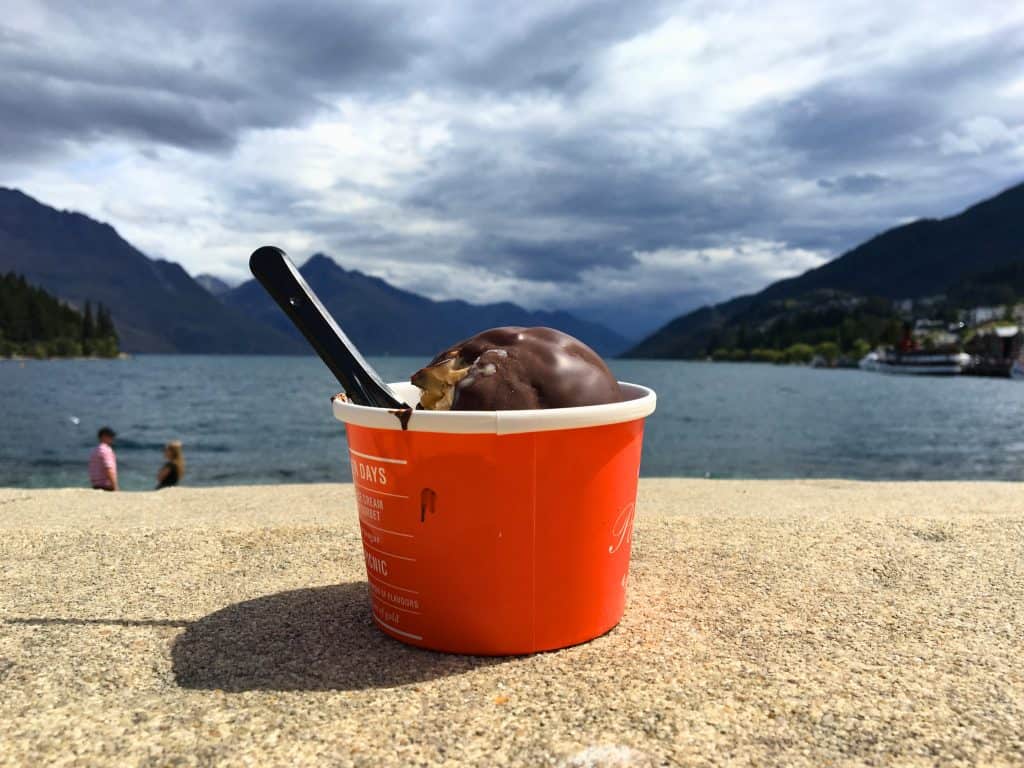
Patagonia Chocolate – For dessert or an afternoon treat. Expect queues in summer, but they move fast. I usually grab an ice cream or coffee to enjoy along the lakefront.
If you’re serious about coffee, I’ve rounded up all my favourite cafés in my Queenstown coffee guide. And during peak travel months, it’s worth booking dinner in advance — popular places like Finz and The Bunker fill up quickly.
Practical Planning Tips
Planning a South Island adventure? Start here: South Island New Zealand Guide.
Getting Around
Queenstown is compact, so you won’t need a car for most of your stay. The town centre is walkable, and almost every major tour or activity offers hotel pick-ups and drop-offs. I usually get around on foot between the lakefront, restaurants and shops — it’s easy to cover everything in a few minutes.
If you’re flying in, Queenstown Airport is only about 15 minutes from town. There’s a regular public bus, but I prefer to use a shared shuttle, as it drops you directly at your accommodation. I’ve used SuperShuttle about 20 times all over New Zealand, and it’s usually my first choice to get to and from airports.
Uber also operates here and can be handy for short trips, especially to or from the Skyline Gondola area.
For day trips to Arrowtown, Glenorchy or Wanaka, having a car gives more flexibility, particularly if you like stopping for photos. Parking in central Queenstown, however, can be limited and expensive. I normally collect a rental car from the airport at the end of my Queenstown stay, just before continuing my South Island itinerary.
If you’re visiting in winter, be aware that local roads (especially the Crown Range) can be icy. Check road conditions on NZTA before driving and carry snow chains if you plan to head towards the ski fields.

Budgets
Your spending in Queenstown can vary quite a bit depending on how adventurous your plans are.
- Budget – NZ $100–150 per day (hostel stay, public transport, self-catering)
- Mid-range – NZ $200–350 per day (comfortable hotel, one paid activity, dining out)
- Luxury – NZ $400 + per day (boutique hotels, premium tours, fine dining)
Adventure activities and scenic flights are the biggest cost jump, while free viewpoints and short walks can balance things out.

What to Pack
Queenstown’s weather changes quickly — it can be sunny one minute and cold or windy the next. Even in summer, bring layers and a waterproof jacket.
- Lightweight layers and a warm jacket year-round
- Waterproofs for sudden rain
- Comfortable walking shoes
- Sunglasses and sunscreen (the UV index is very high in New Zealand)
- Warm hat, gloves and thicker layers if you’re visiting in winter
If you’re extending your trip around the country, my post on getting around New Zealand without a car covers coaches, tours and intercity transport in more detail.

Booking Resources
Here are a few trusted resources I use when planning my own trips:
- Flights: Compare prices on Skyscanner or Google Flights
- Accommodation: I usually book through Booking.com
- Tours & Activities: GetYourGuide and Viator both have all the Queenstown activities you could wish for!
- Car Hire: DiscoverCars lets you compare local rental companies easily

🚐 Exploring more of Aotearoa? You’ll find all my New Zealand travel posts in one place.
FAQ: Planning Your 5 Days in Queenstown
Here are a few of the most common questions I get about spending five days in Queenstown, based on my own visits and what readers often ask when planning their trip.
Is 5 days enough in Queenstown?
Yes — five days is a great amount of time in Queenstown. You can fit in adventure activities, a Milford or Doubtful Sound day trip, a visit to Arrowtown or Glenorchy, and still have time to relax. It’s long enough to enjoy the town without rushing, but short enough to fit comfortably into a South Island itinerary.
How to spend 5 days in Queenstown in winter?
Winter in Queenstown is all about snow and scenery. You can follow this same itinerary with a few small changes — swap the lake walks for time at the ski fields, and book the TSS Earnslaw lunch cruise instead of dinner so you still enjoy the daylight views. The Onsen Hot Pools are even better when it’s cold outside, and most activities still run through winter.
Can you visit Milford Sound from Queenstown in one day?
Yes, you can, but it’s a very long day. The drive each way takes around five hours, so it’s much safer and more relaxing to join a guided coach tour that includes a cruise on the fiord. I’ve driven the road myself, but only from Te Anau — I wouldn’t recommend self-driving from Queenstown for a day trip.
What’s the best order to plan activities in Queenstown?
Try to schedule weather-dependent experiences, like skydiving or scenic flights, at the start of your trip. That way you’ll have spare days to reschedule if they’re cancelled. Quieter activities — such as Arrowtown or wine tasting — work best in the middle or end of your stay when you want to slow the pace a little.
Is Queenstown worth visiting without doing adventure sports?
Absolutely. Queenstown’s scenery alone is reason enough to visit, and there’s plenty to do even if you’re not keen on skydiving or bungy jumping. You can enjoy lake cruises, wine tours, short walks and scenic drives to Glenorchy or Wanaka — it’s just as memorable without the adrenaline.
Can this itinerary work without a car?
Yes! Most of the activities and tours mentioned include hotel pick-ups, and Queenstown itself is easy to walk around. If you’re staying central, you won’t need a car until you continue your trip elsewhere. I usually rent one from the airport at the end of my stay to start the next leg of my South Island drive.
When’s the best time to visit Queenstown?
Queenstown is a year-round destination. Summer (December–February) is warm and great for hiking, lake activities and long evenings outdoors. Winter (June–August) brings snow to the surrounding mountains and turns Queenstown into a ski hub. Spring and autumn are quieter and often more affordable, with fewer crowds and still plenty to do.
For seasonal details, see my full post on the best time to visit New Zealand.

Next Steps
If you’d like to compare different trip lengths, take a look at my Queenstown Itinerary post — it includes 2-, 5- and 7-day options to help tailor your visit to the time you have available.
For more detailed planning and inspiration, you might also like:
- Best Things to Do in Queenstown – covers adventure activities, viewpoints and local favourites.
- Best Coffee in Queenstown – a quick guide for caffeine lovers (I’ve tested them all).
- Best New Zealand Road Trips – for ideas on extending your journey beyond Queenstown.
- Where to Stay in Queenstown – my full breakdown of the best neighbourhoods and hotel styles.
- Is Queenstown Worth Visiting? – a deeper look at why it’s one of New Zealand’s most popular destinations.
Whether you’re planning to spend five days or a full week, Queenstown is one of those places that always feels too short — no matter how long you stay.
